The definition of a bank and what it means for tech companies today
The definition of a bank and what it means for tech companies today
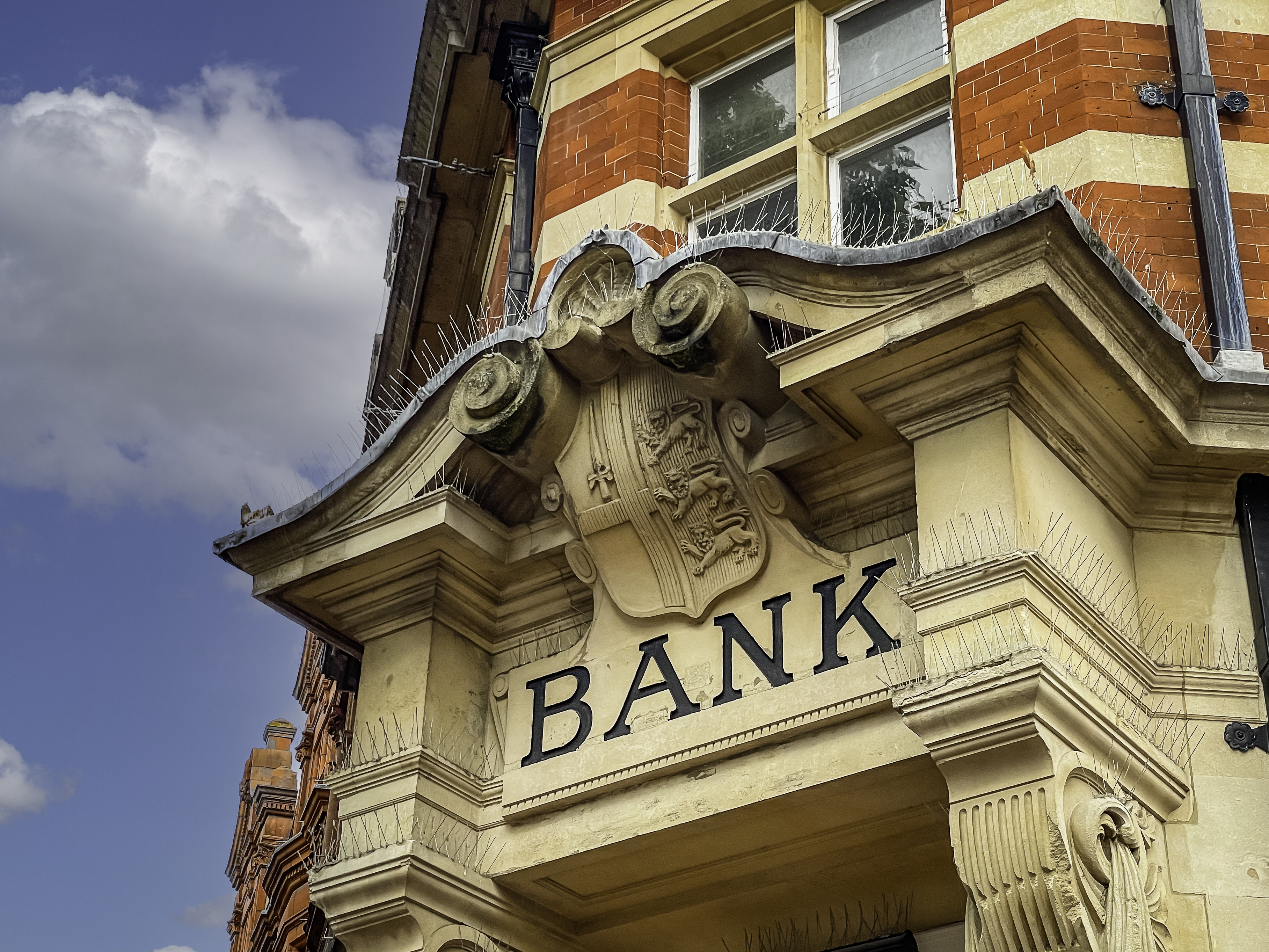

As a kid, I’d sit at the window of my grandmother’s apartment, with a piggy bank filled with spare change, a pen and some paper, and play “bank.” I kept deposit records for, invested in, and lent money out to the imaginary people who came through my institution. Years later, actually working at a bank, I did the same thing—just with a bit more sophistication.
At their core, what do banks do?
Banks take capital (deposits) and extend it to people who need it now but should have it later (lending).
A bank lends its own name in the form of a bank guarantee that lets a weaker borrower get financing it couldn't get on its own, with the bank agreeing to backstop it.
And, the part regulators can lose sleep over, a bank concentrates the credit risk of many counterparties onto one balance sheet, on the theory that its capital base can absorb probability-weighted losses.
With that in mind, I’ve been thinking more and more that the lines around who counts as a bank are getting blurry. Many tech companies, like Nvidia and Alphabet, are checking all three of these boxes.

Nvidia explicitly (and defensively) says in its own 10-K: "We have not entered into any financing arrangements." Technically that is true. There are no loans to a customer anywhere in Nvidia's filings. But if you define a bank by what it does, rather than by what it calls the paperwork, Nvidia is closer to a bank than it was even at the start of 2026.
It's extending capital to the companies that need it to grow. Its equity book has grown to nearly $100 billion in about a year, funding OpenAI, Anthropic, CoreWeave, and dozens of smaller labs before they've proven they can stand on their own. Capital extended on the hope of being repaid later—a lot like patient credit.
It's lending its name: Guarantees now run past $164 billion on lease guarantees for AI cloud partners, buy-back commitments and residual-value guarantees on data centers housing its own chips. Nvidia's credit standing is what's letting counterparties access financing on terms they couldn't get alone. And purchase and supply commitments to its own chip suppliers nearly tripled through June, to $279 billion.
It's concentrating risk. Nvidia's own CFO has said: many of these AI clouds and model makers "are growing faster than their balance sheets and long-term credit profiles can support". Many are the same counterparties in the equity book, the guarantees, and the purchase-commitments. If one of them stumbles, Nvidia doesn't just lose a sale, it sees an impairment and a guarantee call.
Some of this is genuinely just Nvidia doing what every platform company with a sizable balance sheet does: invest in the ecosystem that buys your product. But the scale and the structure here are different.
Of course, they’re not alone. Others are running this playbook, Nvidia is just covering more ground across three categories.

Amazon's combined Anthropic-and-OpenAI stake is filed at roughly $220 billion and Google's non-marketable securities line stands at $131.5 billion. Both have overtaken Nvidia's equity book mostly because Anthropic's own valuation jumped from $350 billion to $965 billion in a single quarter: a markup on stakes already held, not new cash going in the door. Nvidia's equity book, by contrast, grew mostly through fresh capital into new deals.
Microsoft's real equity exposure is $36.3 billion. Within that, Microsoft's OpenAI stake is not marked at fair value the way Amazon's and Google's stakes are. It remains the smallest of the four large hyperscalers on equity, and it has no guarantee mechanisms we could find.
AMD's equity book is the smallest, at roughly $2.0 billion, but it discloses a $4.1 billion "Lease Guarantees" exposure. They also issued OpenAI and Meta warrants for up to 160 million AMD shares each, with zero balance-sheet impact so far—while separately carrying a filed $5 billion forward commitment tied to Anthropic. One more detail: AMD has a $100 million term loan receivable to one of its equity-method investees, a small exception to the "guarantees and equity, never cash loans" pattern others follow.
Finally, Broadcom carries no equity stakes and no warrants anywhere in its filings. But it isn't financing-free. It has a $29 billion maximum-exposure backstop on a customer's AI-rack lease obligation. The customer isn't named in Broadcom's own filing, but it's tied to the first tranche of a larger financing platform built with Apollo Global Management and Blackstone that's reported to scale toward the hundreds of billions as it expands.
Every company here, except Broadcom, also discloses capital committed but not yet funded, distinct from both the equity already on the books and the guarantees extended to third parties.
To size Nvidia's equity and guarantee book against something familiar, they already have $164.5 guarantees and backstops bigger than the balance sheets of Zions Bancorporation or Western Alliance Bancorporation, each under $100 billion in total assets—though still smaller than KeyCorp, Huntington, or Fifth Third.

So Nvidia is extending its credit standing, at a scale that rivals some dedicated financial institutions.
Why this matters:
The bull case for Nvidia has always been demand visibility. But demand visibility built partly on guarantees to your own customers is a more fragile kind of visibility. The circular financing memes have been plentiful. This may explain why it’s been trading in the same range since April.
The other similarity to banks is the concentration of financing and customers, much like the similar structure that made regional bank concentration risk painful in 2023. When underwriting the AI capex thesis, you also are, whether you fully price it in or not, underwriting Nvidia's credit book.