When the dollar flexes: gold's pullback and the view from Japan
When the dollar flexes: gold's pullback and the view from Japan
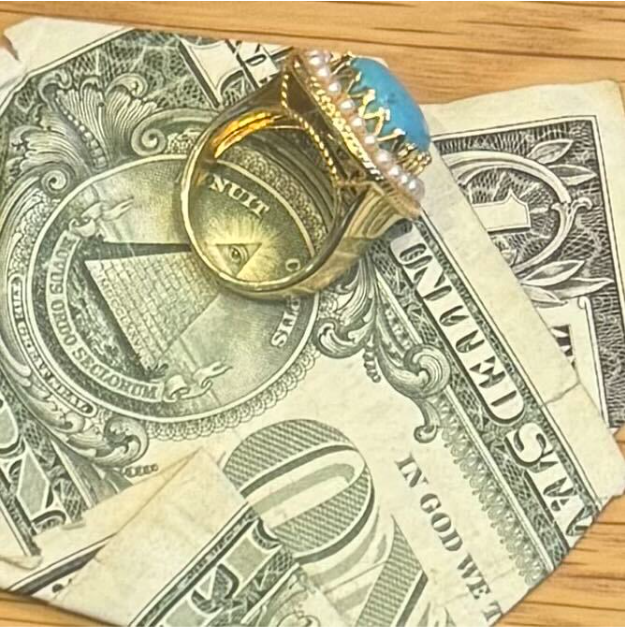

Back in August, I wrote about my grandparents and the gold they kept at the bottom of a drawer. Coins, a necklace, a bracelet. Insurance against a day paper money could stop being trusted. What I didn't say then is not once did they check the price. The gold wasn't a trade; it was an investment for a what-if.
I've been thinking about that a lot the past few weeks. Gold has been anything but quiet. Spot gold closed yesterday at $3,856 an ounce. That's down about 7% for the month and 10% lower for the year.

Why? The short answer is the US dollar. The longer one is about the Fed, real yields, and, maybe, Japan.
A hot CPI and a Fed that now may hike (again)
Last Tuesday, the October Consumer Price Index (CPI) came in hotter than expected: headline prices rose 0.4% on the month vs. a 0.3% forecast, and core rose 0.3% vs. expectations of 0.2%. That 0.3% core number matters because the day before, Fed Governor Waller said a print at or above that level would justify considering a 0.5% increase in the Fed Funds rate in December, just when everyone expected maybe an increase of 0.25%.
Markets repriced this fast. By Thursday, the market priced in odds of a December hike at essentially 100%, with about an 11% chance of a 0.5% move, up from zero before the report The Fed's next decision is December 9.
The dollar did what it does when US rates are expected to rise faster than everyone else's: it rose. By the Fed's own index against other major currencies, the dollar is up about 5% this year.
Why a strong dollar and higher yields hurt gold
1. Gold is priced in dollars. When the dollar strengthens, gold gets more expensive for buyers paying in euros, yen, rupees or yuan, which can dampen demand. It also means the dollar price of gold can fall even when demand outside the US holds up. This year, the link has been tight: on days the dollar rose 1%, gold fell about 2.5% on average. The dollar's low for the year came on January 29, the same day gold set its record.
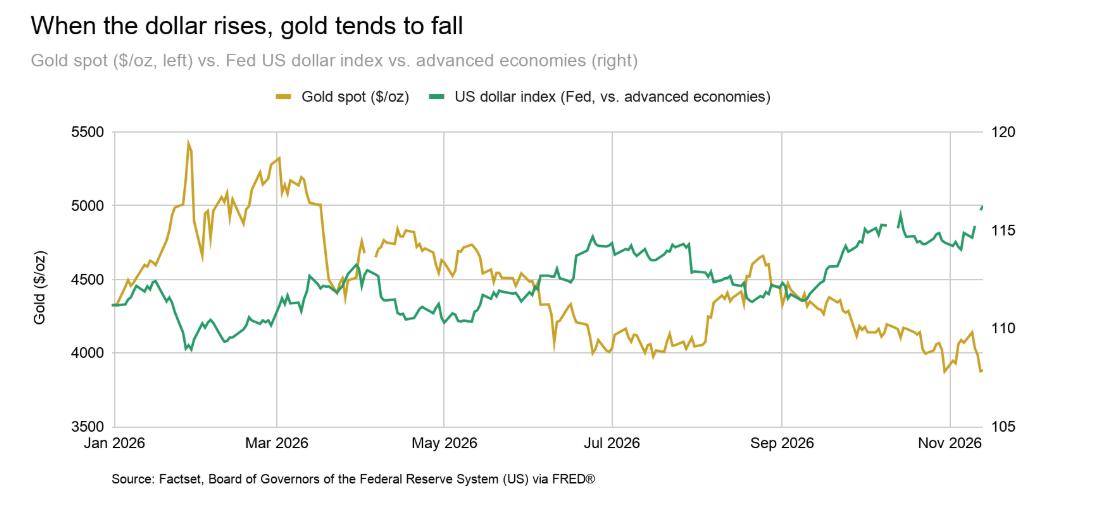
2. Gold doesn't pay interest or dividends. When you can earn interest on a Treasury bill, the opportunity cost of holding a metal that yields nothing goes up. The 10-year TIPS yield (the real yield) is around 2.9%, with the nominal 10-year above 5%. That's a high bar for an asset with no coupon.
In August, I said rates had become "the new market put": they get high enough, and someone acts to stamp them down. This week, the opposite force was in charge. The Fed's declared job is inflation (for this past week, anyway), and that means it's leaning into higher short-term rates.
The slower story: Japan
Japan has been the world's biggest foreign owner of US Treasuries for years, largely because its own bonds paid next to nothing after decades of deflation. That's changing now as inflation is back around the world. The Bank of Japan raised its policy rate to 1.25% in September, its highest in about three decades, and markets are expecting another hike to 1.5% at its December 17-18 meeting. Japan's 10-year government bond yield is near 3%, levels not seen since the mid-1990s.

So what’s the relationship for gold? When Japanese investors can earn more at home, they have less reason to buy US Treasuries. Hedged Japanese government bonds now pay more than hedged Treasuries for Japanese buyers. Less foreign demand for Treasuries can push US long-term yields higher, which pushes real yields (aka yield less inflation) higher, which, as above, may be a headwind for gold.
This is a looser relationship, though. Japanese investors have reduced their US debt holdings over the last year by $126B through September, but still hold over $1T.
So while Japan isn't what knocked gold prices down, it is part of why US long-term real rates have stayed stubbornly high all year, and it's one of the reasons I don't expect that pressure to go away quickly. Remember, it was the yen that prompted the joint US-Japan intervention in July, the first since 1998.
What hasn't changed
The buyers I care most about for the longer-term thesis are still buying. Central banks bought 321 tonnes of gold in the third quarter, up 42% from a year ago, according to the World Gold Council, led by China and Poland. Gold ETFs look to have inflows over the last month. What weakened was the price-sensitive buying: bar and coin demand fell 19% and jewelry fell 17% in Q3.
In other words, the slow money is still showing up. The fast money, which moves with rates and the dollar, is what's been leaving. We saw a version of this in January, when gold (and silver) fell almost 9% in a single day on January 30 after CME raised margin requirements on gold futures. Like I wrote last week about AI stocks, leverage tends to make the exits more crowded.
Gold's pullback looks like a rate-and-dollar story, not necessarily a broken thesis. Here's what I'm watching in either direction:
- What would extend the pain: a December hike that comes with signals of more than what’s expected to follow, a dollar that keeps grinding higher, or Japanese money finally coming home in size, pushing US long-term yields higher.
- What would help gold find a floor: inflation cooling (lower energy prices could help here), a Fed that signals December is close to done, a softer dollar, or central bank gold buying staying near Q3's pace.
My grandparents' gold was never about the price on a given week. A small diversifying slice of a portfolio in gold may still make sense for that same reason. But months like this are a reminder that even a store of value has to compete with the rate the dollar is paying.