Average cost
Robinhood defines average cost as the cost per share of your current open position. It is used to calculate the unrealised profit and loss of your current position. The tax cost basis is different.
Average Cost Calculation
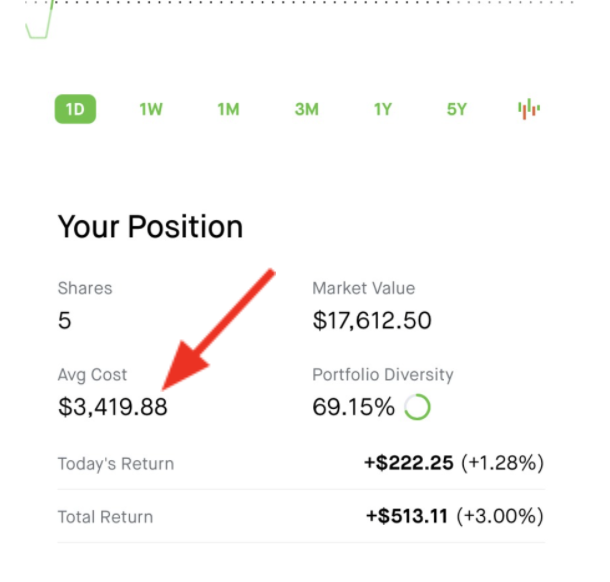
The average cost is also an input to the total return calculation:
Total return = (Market price - Average cost) * Total shares
$513.11 = ($3,522.50 - $3,419.88) * 5 (calculation may reflect sub-penny rounding)
The average cost is used as a reference point for estimating unrealized gains, and isn’t intended for determining your realized gain or loss for tax reporting purposes. If the average cost calculation changes, you’ll see a tooltip explaining the change. You can also read our disclosures at the bottom of the stock, ETF, or options detail pages to see how average cost is defined.
To get this updated average cost calculation for stock or options positions, be sure you’re using the latest version of our app.
Tax cost basis is different
The average cost isn’t the same as the tax cost basis. The average cost or credit calculation may not always include the following:
Do not use these average cost calculations to determine your realised gains or losses for tax reporting purposes because they may not match your tax forms, if applicable.
The tax cost basis is the original cost of an asset or investment, adjusted for applicable trading fees or corporate action activity, for tax purposes. The default method for your Robinhood account is first-in, first-out (FIFO), which is selling the shares or options you bought first. The shares or options themselves aren’t specifically tracked, but the cost associated with those shares or options is expensed first.
You can also review your account statements and tax documents for more insight into your historical cost basis.
Robinhood doesn’t provide tax advice. For specific questions, consult a tax professional.